by Erika Soliven, Marketing Director at PowerShelter
Summary
What you need to know about e-bike battery swapping
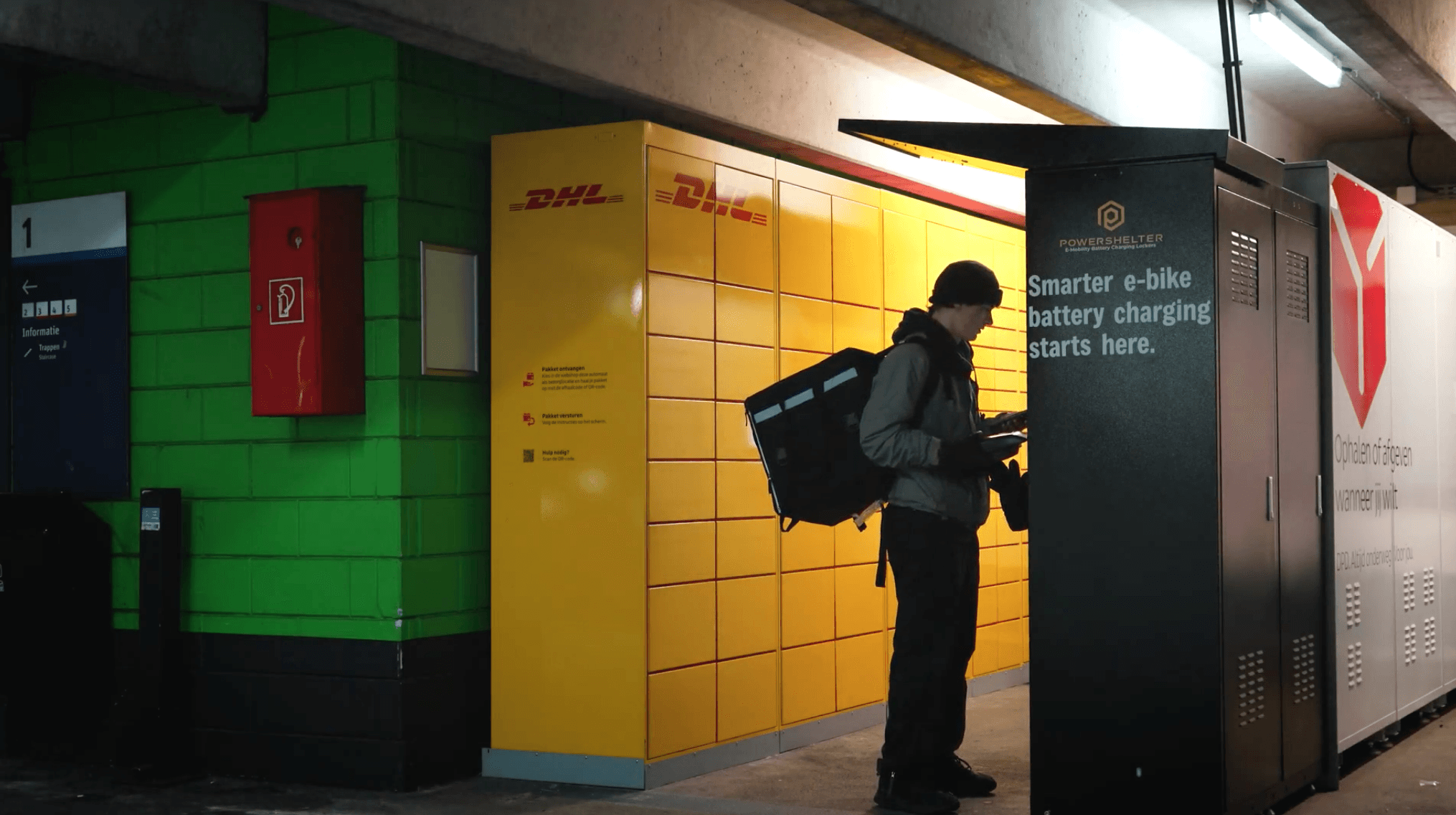
E-bike battery swapping lets riders swap a depleted battery for a fully charged one at a dedicated station in under a minute, removing battery management from the working day entirely.
Standard e-bike batteries take several hours to charge. For couriers and commercial fleet riders, that wait time comes directly out of earning time.
3 in 4 lithium-ion battery fires start during the charging phase, according to the IFS (Institut für Schadenverhütung und Schadenforschung, March 2024). SmartSwapping moves that risk out of homes and shared buildings and into fire-rated infrastructure built to contain it.
PowerShelter's SmartSwapping network is battery-agnostic: compatible with any certified battery or charger, so riders and operators are not locked into a single brand.
PowerShelter runs an active battery swapping network in Amsterdam and Berlin. Paris and London are coming soon.
E-bike battery swapping lets riders exchange a used battery for a fully charged one at a dedicated station. Instead of plugging into a wall and waiting hours for a charge, or bringing along a heavy spare battery, riders can swap their empty battery for a full one and ride on. All in under a minute. This means riders can remove battery management from their workday.
Why charging alone doesn’t work for e-bike riders
E-bike batteries take hours to charge. That’s time most riders can’t afford mid-shift, and every stop to charge is time off the road. And for those who don’t live near their delivery areas? A detour home to charge adds another hour of dead travel on top of the wait itself.
For shared mobility operators, the problem looks different but lands the same way: bikes sit idle while batteries charge, affecting availability across their network.
Battery swapping removes the wait and the lost shift time, keeping riders earning and fleets moving.
How electric bike battery swapping works
The process is simple: find a station, swap the battery, and ride on.
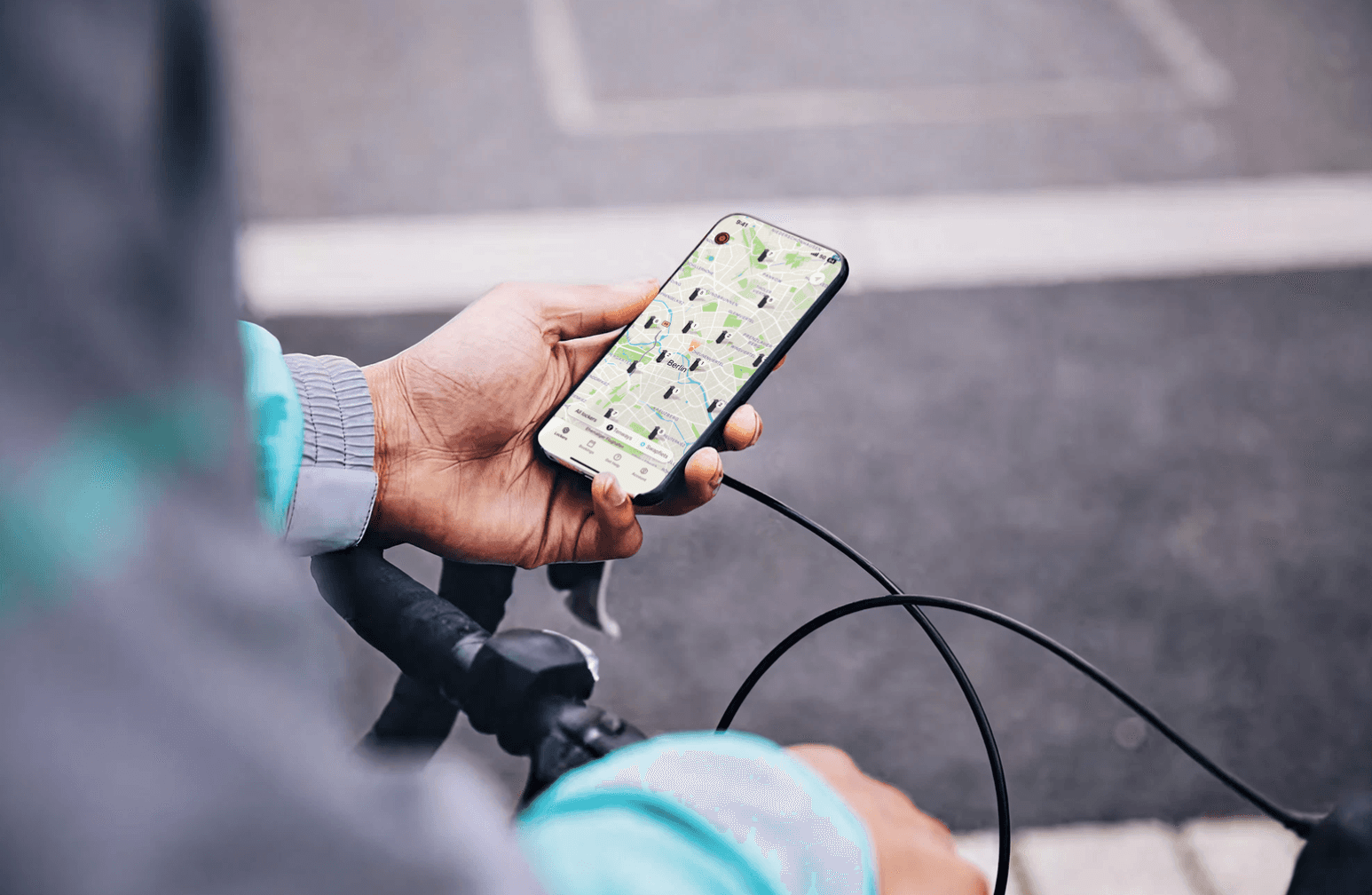
Find the nearest station and reserve a battery. Using the SmartSwapping app, the rider finds a station along their route and reserves a fully charged battery in advance.
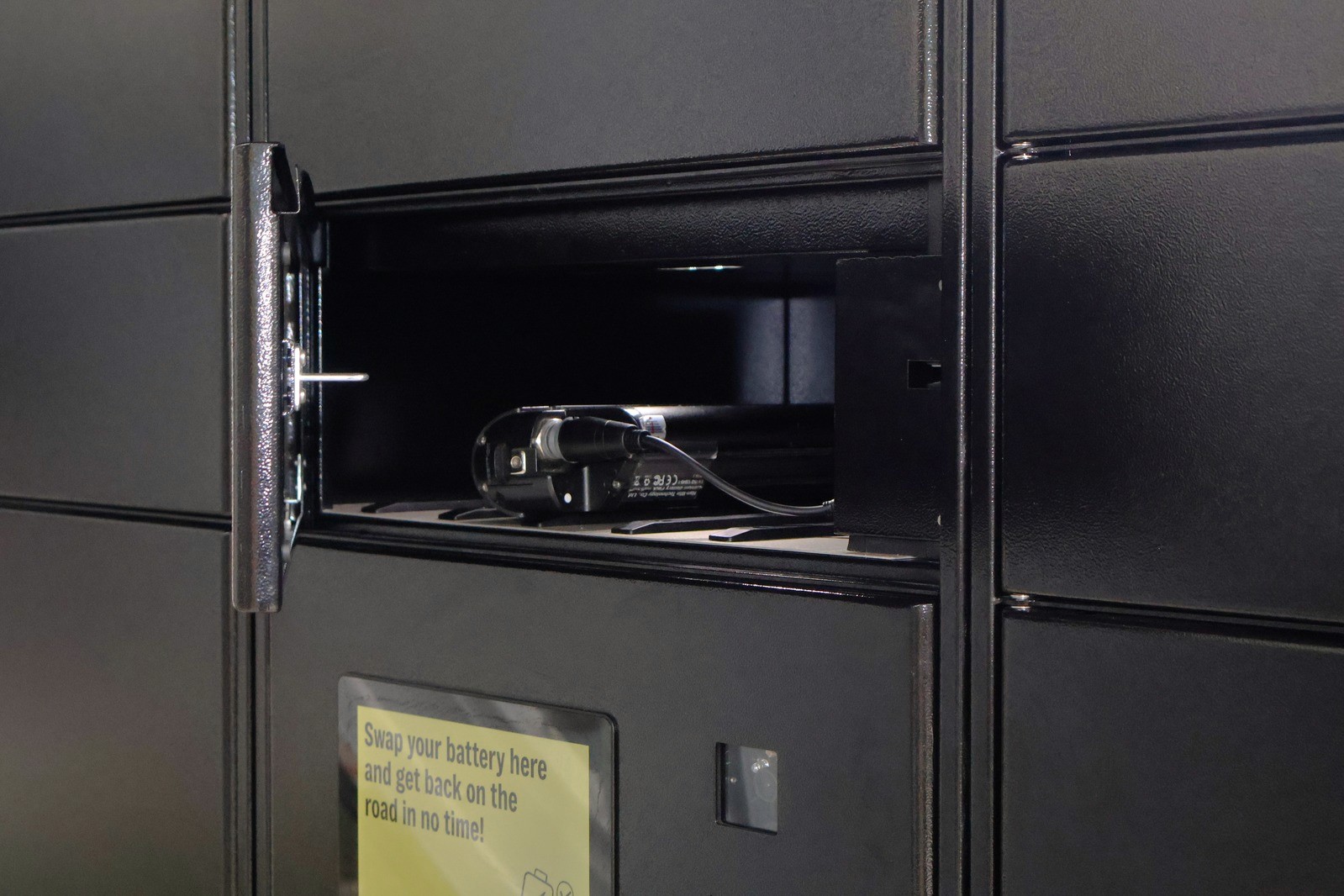
Swap the batteries. At the station, the rider scans their used battery for a quick health check, places it in the locker, and collects a fully charged one in return.
Continue riding. No waiting to charge, no disruption to the shift.
For shared mobility operators, battery swapping keeps bikes in circulation — no dedicated charging infrastructure required.
Is e-bike battery swapping safe?
Yes. Every battery returned to a SmartSwapping station charges inside a fire-rated unit with built-in detection and suppression systems. The fire risk moves out of homes, apartment buildings and shared spaces, and into a system built to contain it.
E-bike battery fires are no longer an edge case. UK fire brigades now respond to a lithium-ion battery fire every five hours, with e-bike fires up 250% in three years, according to figures reported by The Guardian (May 2026). Most of those fires start during charging, often in homes, hallways, and shared residential buildings — exactly where couriers store and charge their batteries overnight.
In Germany, the IFS (Institut für Schadenverhütung und Schadenforschung) reported that 3 in 4 battery fires start during charging.
For anyone depending on riders - and for the riders themselves - this is more than a welfare issue. It’s a liability, and it belongs in infrastructure, not in riders’ hands.
SmartSwapping by PowerShelter.
Battery swapping infrastructure for e-bike fleets, delivery networks, and shared mobility operators. Live in Amsterdam and Berlin, with Paris and London coming soon. Compatible with any certified battery or charger.
Who is e-bike battery swapping for?
Battery swapping serves different operations in different ways, but the experience for riders is the same: find a station, swap batteries, and ride on. More importantly, the core benefit doesn’t change. Riders keep moving while operators remain in control.
Fleet providers: companies like Zoomo, who operate e-bike fleets across the globe, use SmartSwapping’s battery-agnostic network to keep riders on the road and earning, instead of waiting to charge.
Delivery marketplaces: platforms connecting couriers to restaurants and retailers use swapping to reduce rider downtime and improve shift reliability across their networks.
Shared mobility operators: e-bike rental and sharing schemes use swapping to replace manual battery field operations with a decentralised network, keeping bikes in circulation without the staffing overhead.
Private fleets: businesses running their own delivery operations use swapping to cut battery management overhead and remove fire liability from their premises.
Independent couriers: riders use swapping to keep working without needing to return to a fixed charging point away from the restaurants and shops. Amsterdam-based couriers can join the waitlist for monthly access.
Where is e-bike battery swapping available?
SmartSwapping is designed for cities where e-bikes are already part of daily life: dense urban areas where riders need reliable, on-route battery access.
The network is currently live in Amsterdam and Berlin, with Paris and London coming soon. New locations are added as the network grows.
Ready to find out which swapping model fits your operation? Talk to our team.
FAQs
What is e-bike battery swapping?
E-bike battery swapping lets riders exchange a used battery for a fully charged one at a dedicated station in under a minute, removing battery management from their workday.
Is battery swapping better than charging?
For high-mileage riders and commercial e-bike operations, yes. For private owners who charge overnight at home, charging may be sufficient. But for couriers and commercial operators whose livelihood depends on staying on the road, a swap that takes under a minute removes battery management from the workday.
SmartSwapping goes further still: as a battery-agnostic network, it's compatible with any certified battery or charger, so riders and operators aren't locked into a single brand to access it.
How does e-bike battery swapping work?
A rider uses the SmartSwapping app to reserve a fully charged battery at a nearby station. Once at the station, they scan their used battery for a quick health check, place it in the locker, and collect a fully charged one in return. The swap takes under a minute.
Is e-bike battery swapping a proven concept?
Yes. Battery swapping has been operating at scale in China for years, across electric cars, mopeds, and two-wheelers — NIO alone has completed over 100 million battery swaps to date. In Europe, the model is newer but growing quickly across European cities, driven by the rise of e-bike delivery fleets and tightening urban fire safety regulation. SmartSwapping is bringing proven swapping infrastructure to these cities, starting with Amsterdam and Berlin.
Is e-bike battery swapping the same as battery swapping for cars or mopeds?
The principle is the same across all vehicle types (exchange a depleted battery for a fully charged one), but the hardware, battery specifications, and infrastructure differ significantly. Car and moped swapping networks are built around their own closed ecosystems — specific vehicles, specific batteries, specific stations. SmartSwapping is purpose-built for pedal-assist e-bikes and cargo bikes, with stations and battery formats designed specifically for urban cycling and delivery use.
Is e-bike battery swapping safe?
Yes. Every battery returned to a SmartSwapping station charges inside a fire-rated unit with built-in detection and suppression. The fire risk moves out of homes and shared buildings and into infrastructure built to contain it.
Where is SmartSwapping available?
SmartSwapping is live in the Netherlands (Amsterdam) and Germany (Berlin), with Paris and London coming soon. The Amsterdam network has been operating since 2025, serving courier fleets and independent riders.
Who is e-bike battery swapping for?
Battery swapping works for fleet providers, delivery marketplaces, shared mobility operators, private fleets, and independent couriers. The right model depends on your operation.