Client
Tesla Giga Berlin-Brandenburg
(Advanced manufacturing hub)
Hardware
4x CoreShelter units
Internal thermal containment & weather-resistant construction
Integrated 13.56 MHz RFID access control
Users
Factory workforce
Frictionless entry via existing staff badges
Access
RFID integration
13.56 MHz MIFARE badge system
Impact
Reinforced site safety standards with integrated end-of-trip charging
Results
100% outdoor charging, zero indoor thermal risk
CHALLENGE: The Unmanaged Perimeter Risk
Tesla's Giga Berlin-Brandenburg operates at a scale and velocity that leaves no room for unmanaged variables. As e-mobility adoption grew among the workforce, the lack of dedicated charging infrastructure became a significant operational friction point.
Without a designated external solution, high-capacity lithium-ion batteries were being brought into the main facility daily. Charging occurred at desks and along corridor hallways, introducing fire risk into a highly controlled €5+ billion manufacturing environment. The challenge was to relocate this risk outside the building without creating a barrier to staff e-mobility.
SOLUTION: Integrated, Staff-Centric Infrastructure
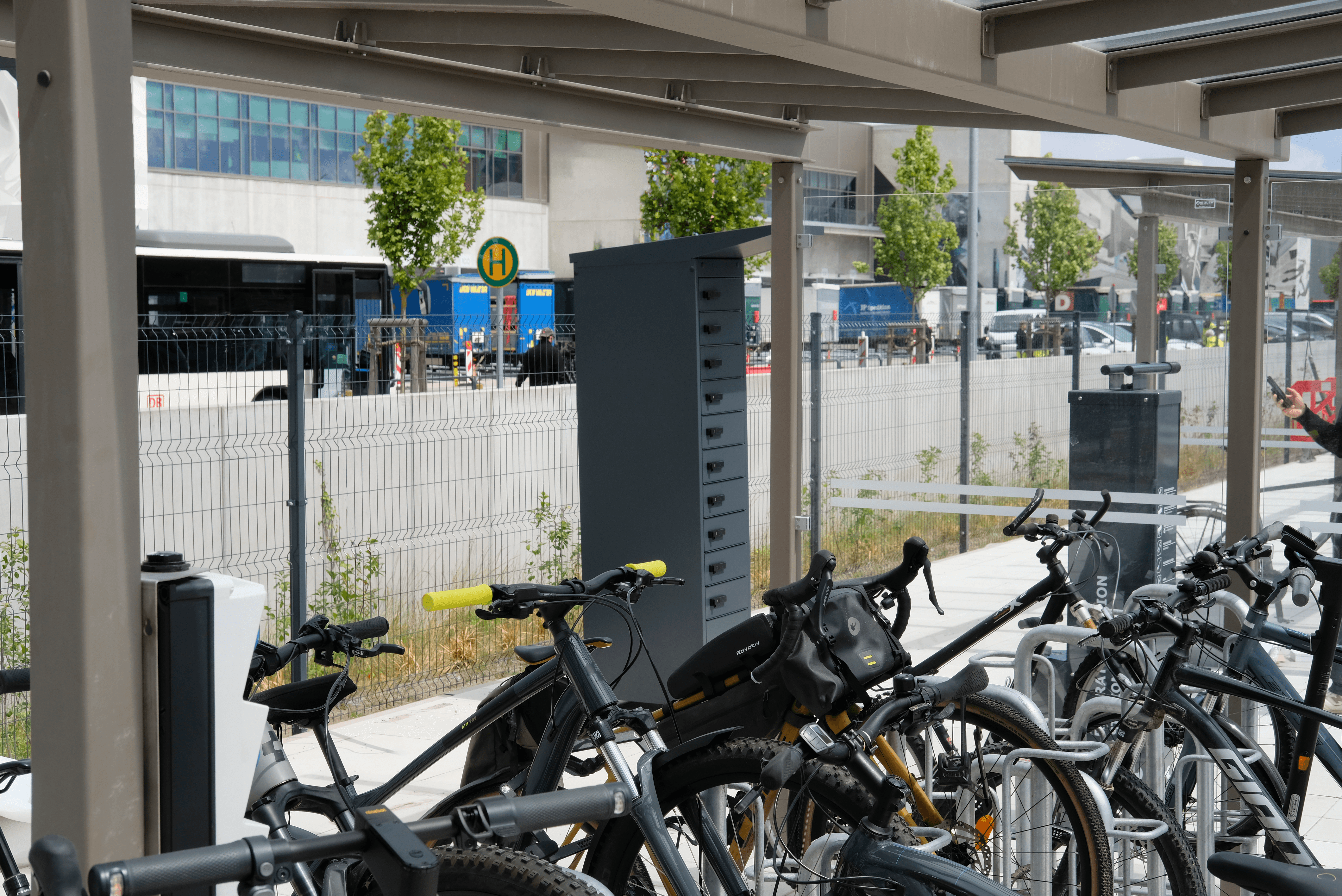
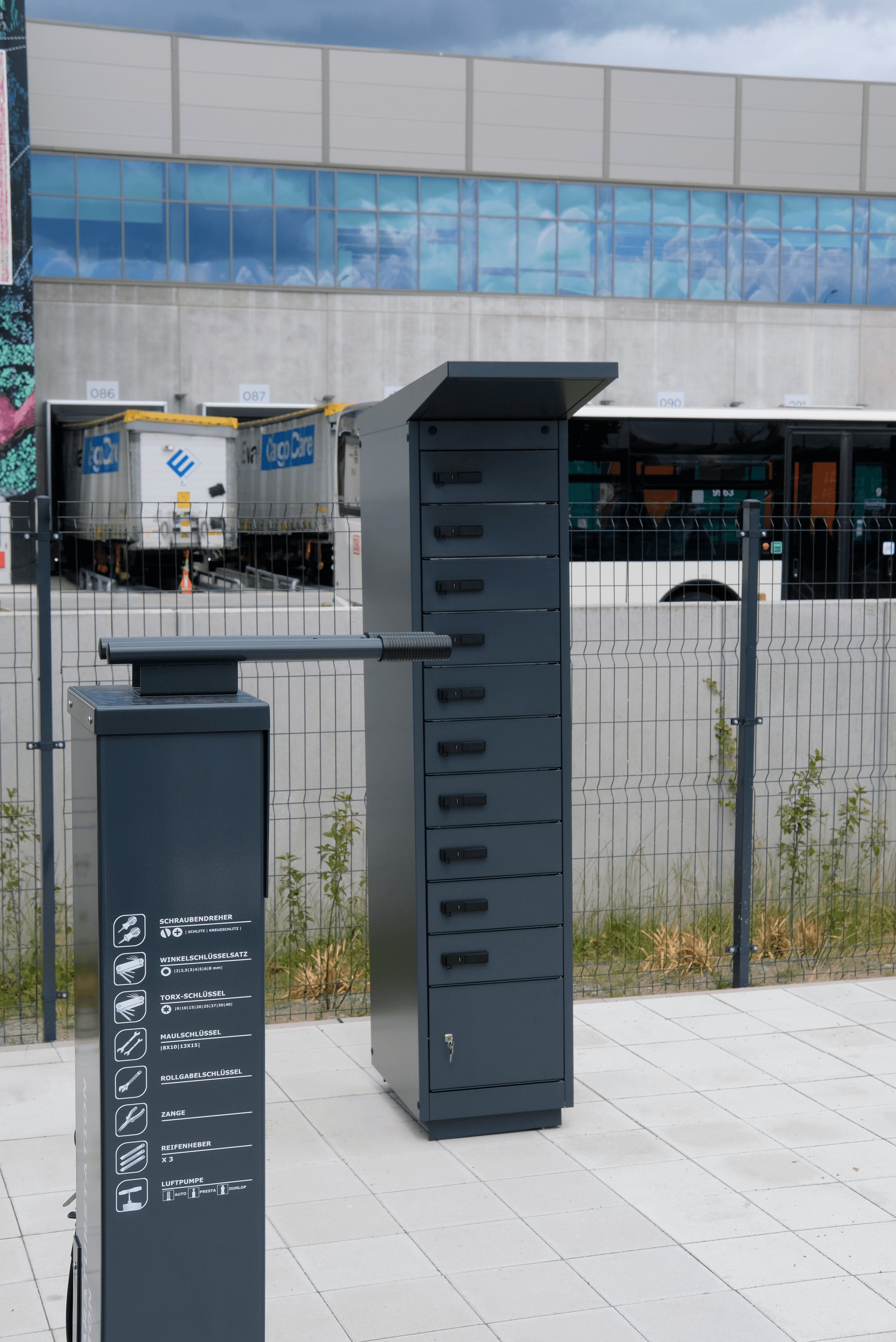
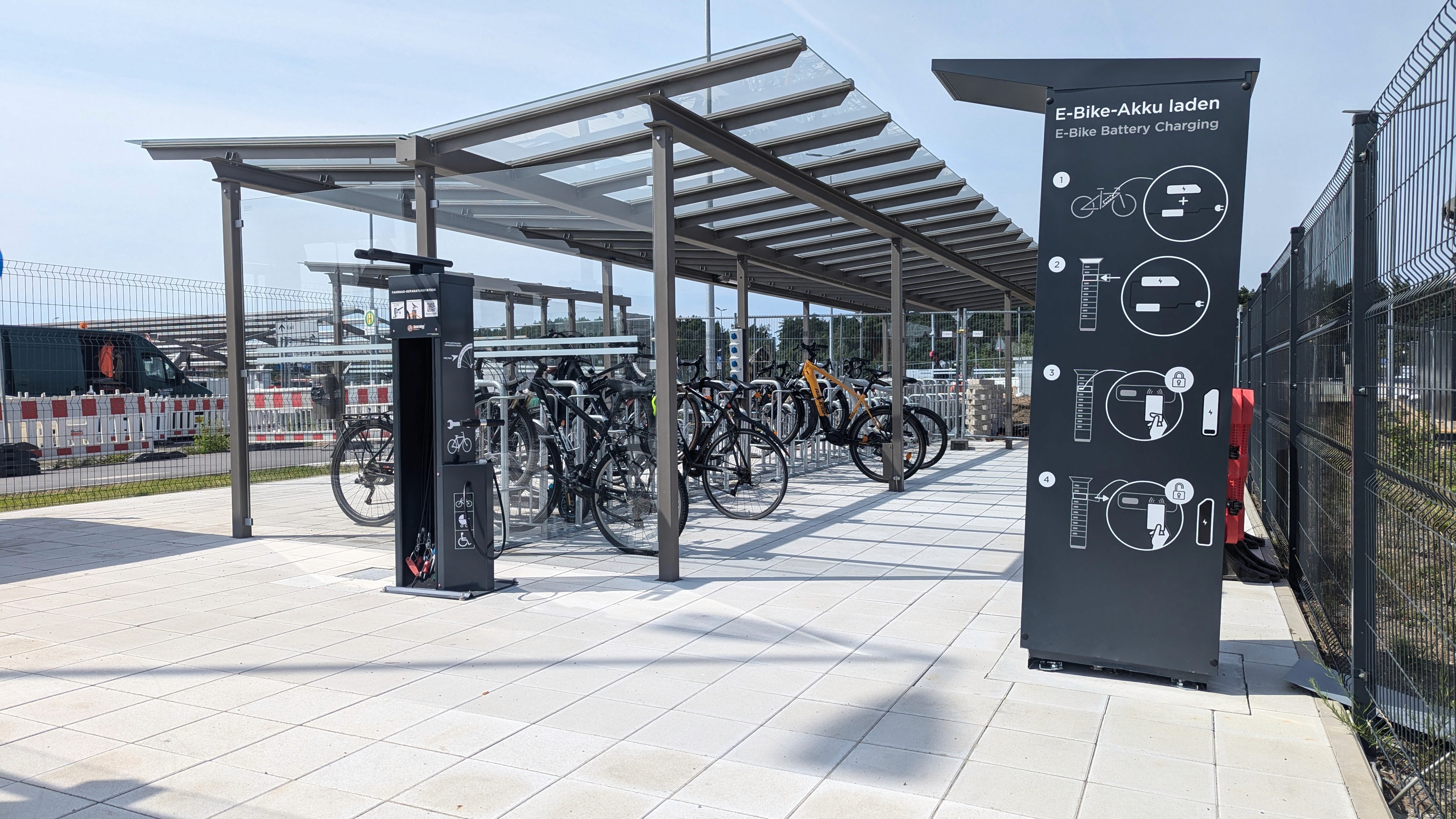
Tesla installed four CoreShelter units at its existing bike parking zones, addressing a primary source of unmonitored site risk directly where staff arrive.
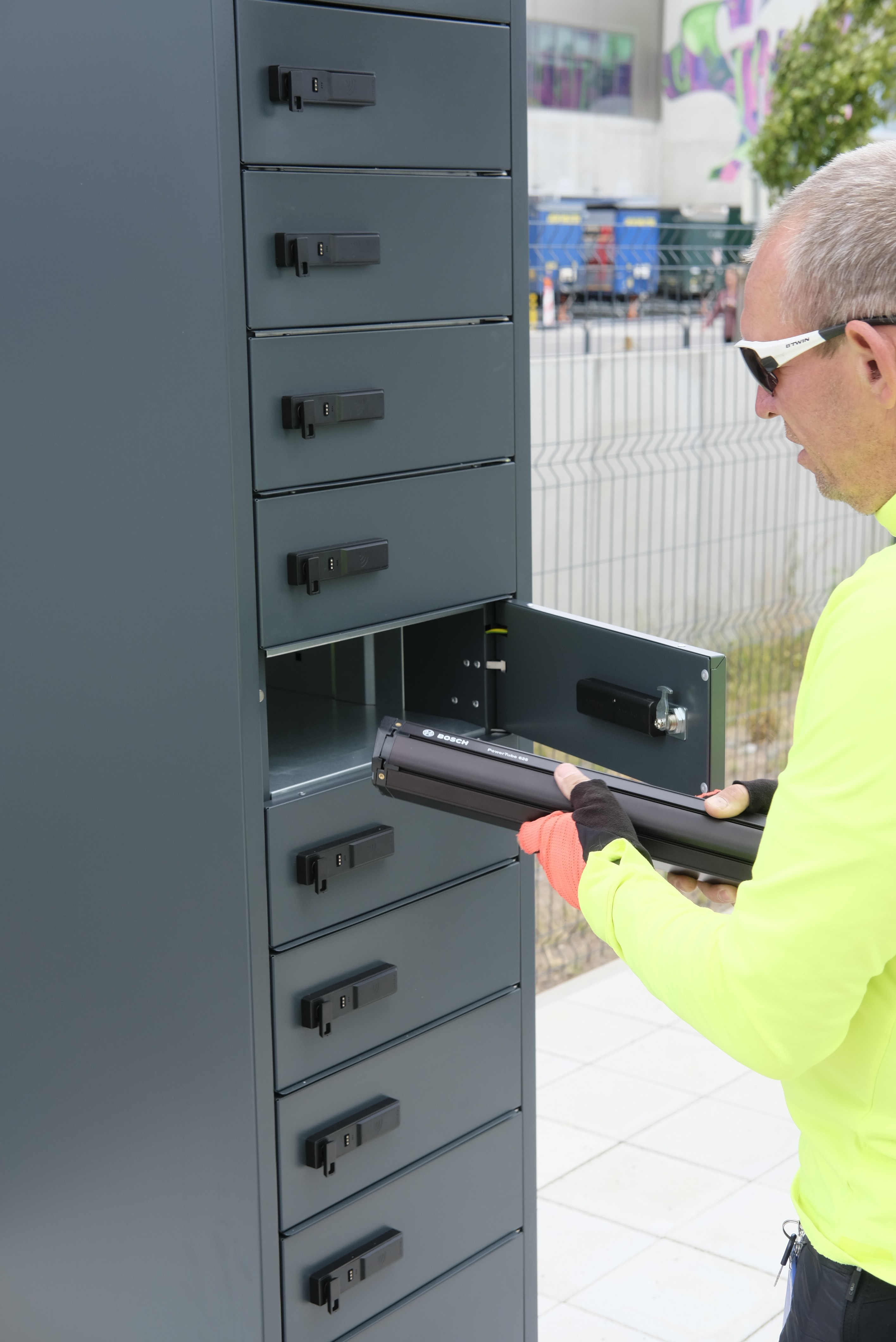
Frictionless Badge Access: The lockers were fitted with RFID locks compatible with Tesla's existing 13.56 MHz MIFARE employee badges. Staff use their standard access card to secure a charging locker, with no extra keys or secondary apps required.
Shift-Rotation Logic: The locks operate on a 12-hour cycle, opening automatically after 12 hours to prevent long-term occupation and ensure charging capacity remains available across every arriving shift.
Active Fire Mitigation: Each unit features EV-grade mica lining and integrated sensors, ensuring that in the event of a battery malfunction, the risk is contained far from the production line and the people working on it.
“The lockers have been great to have! It's been convenient after a long ride to work to be able to charge my battery at our end of trip parking."
Facilities Manager — Tesla Gigafactory
IMPACT: Reinforcing the Safety Standard
The CoreShelters transitioned the facility from ad-hoc risk to professional, high-performance infrastructure.
Asset & Production Security: Moving 100% of charging outdoors protected Tesla's capital investment and high-value production lines from indoor thermal runaway risk via e-bike batteries.
Easier Commutes: Employees enjoy a streamlined arrival routine. Charging happens directly where bikes are parked, removing the need to carry heavy batteries through the building.
Site Safety Maintained: In a world-class manufacturing facility, ad-hoc charging is a liability. PowerShelter's fire-rated lockers function as an extension of the site's existing safety protocols.
KEY TAKEAWAY: World-Class Facilities Need World-Class Charging Infrastructure
Tesla didn't compromise on safety standards when e-bike adoption grew across its workforce. Four CoreShelter units, integrated with existing MIFARE badge access and installed at the bike parking zone, moved 100% of lithium-ion bike charging outside the building. Thus protecting a €5+ billion facility without adding friction to the daily commute.